

Bees have been perfecting their craft for millions of years, creating one of nature’s most fascinating and useful substances: beeswax. But how is beeswax made, and why do bees need it in the first place? The answer lies in the hardworking life of the honeybee, whose daily rituals create not only honey to feed the hive, but also the beeswax that stores it.
Where Does Beeswax Come From?
Beeswax begins with honey. When bees collect nectar and pollen from flowers, the nectar is transformed inside the hive into honey through enzymes, evaporation, and careful wing-fanning (that constant buzzing sound you hear coming from bee hives) that reduces its water content. Honey is stored in combs for food, especially during winter. But bees don’t just live on honey. They also use it to make beeswax.
Worker bees between 10 and 16 days old (and who are all female, by the way) are the colony’s master wax producers. At this stage of life, they develop special glands on their abdomens that convert sugars in honey into wax. Producing a single pound of beeswax requires the colony to consume 6–8 pounds of honey—an astonishing effort for these short-lived worker bees, who live only about 35 days in the summer.
How Do Bees Make Wax?
Wax starts as tiny transparent flakes that appear on a bee’s abdomen. These scales are often transferred by hind legs and forelegs before reaching the mandibles (jaws). Once in the mouth, the wax is chewed and softened with saliva, turning into pliable building material. Sometimes one bee handles this entire process, while other times neighboring bees lend a helping mandible.
Bees then use this softened wax to build the honeycomb—those perfectly uniform six-sided hexagons. The hexagon isn’t just beautiful; it’s mathematically efficient. This shape holds the greatest volume of honey with the least amount of wax, making it one of nature’s engineering triumphs.
The hive itself is carefully regulated at around 95°F, which keeps the wax pliable enough for construction but firm enough to hold honey securely. Too hot, and wax melts at about 149°F. Too cold, and it becomes brittle. Bees naturally maintain the perfect working temperature inside the hive.
How Bees Make Honey (And Why It Matters for Wax)
Honey and beeswax are inseparable. To understand wax, you must know the story of honey. Worker bees visit up to 1,500 flowers a day, storing nectar in a “honey stomach.” Once full, nearly equal to her body weight, she returns to the hive and passes the nectar mouth-to-mouth to house bees. Enzymes break down complex sugars, transforming nectar into simple sugars with a long shelf life.
Initially, nectar is about 80% water. Bees fan their wings tirelessly to evaporate this down to 17–18% moisture, producing the golden, thick honey we know. This honey nourishes the colony, fuels wax production, and becomes the glue that holds the hive’s life cycle together.
The Color and Life of Beeswax
Fresh beeswax is nearly white, slowly darkening as it’s used in the hive. When wax stores brood (bee larvae) or pollen, pigmentation can range from pale yellow to deep brown or even black. Unlike honey color, wax color does not indicate quality; it only indicates age and use.
High-quality candle makers now avoid harsh bleaching processes once used on beeswax. Pure beeswax should have a natural, sweet, honey-like aroma. If you detect anything medicinal or chemical, the wax has likely been altered.
Fun Beeswax Trivia
- All worker bees are female. Male bees are called drones, and their primary role is to mate with the queen.
- Bees must eat about 8 pounds of honey to make 1 pound of beeswax.
- A worker bee may live only 35 days during peak summer, but in that time she helps create the very structure of the hive.
- The honeycomb structure made of beeswax is so strong and efficient that mathematicians and engineers have long studied it as a model for design and architecture.
- Beeswax isn’t just for candles. Historically, it’s been used for everything from sealing documents to polishing wood and conditioning leather.
Why Does Pure Beeswax Matter?
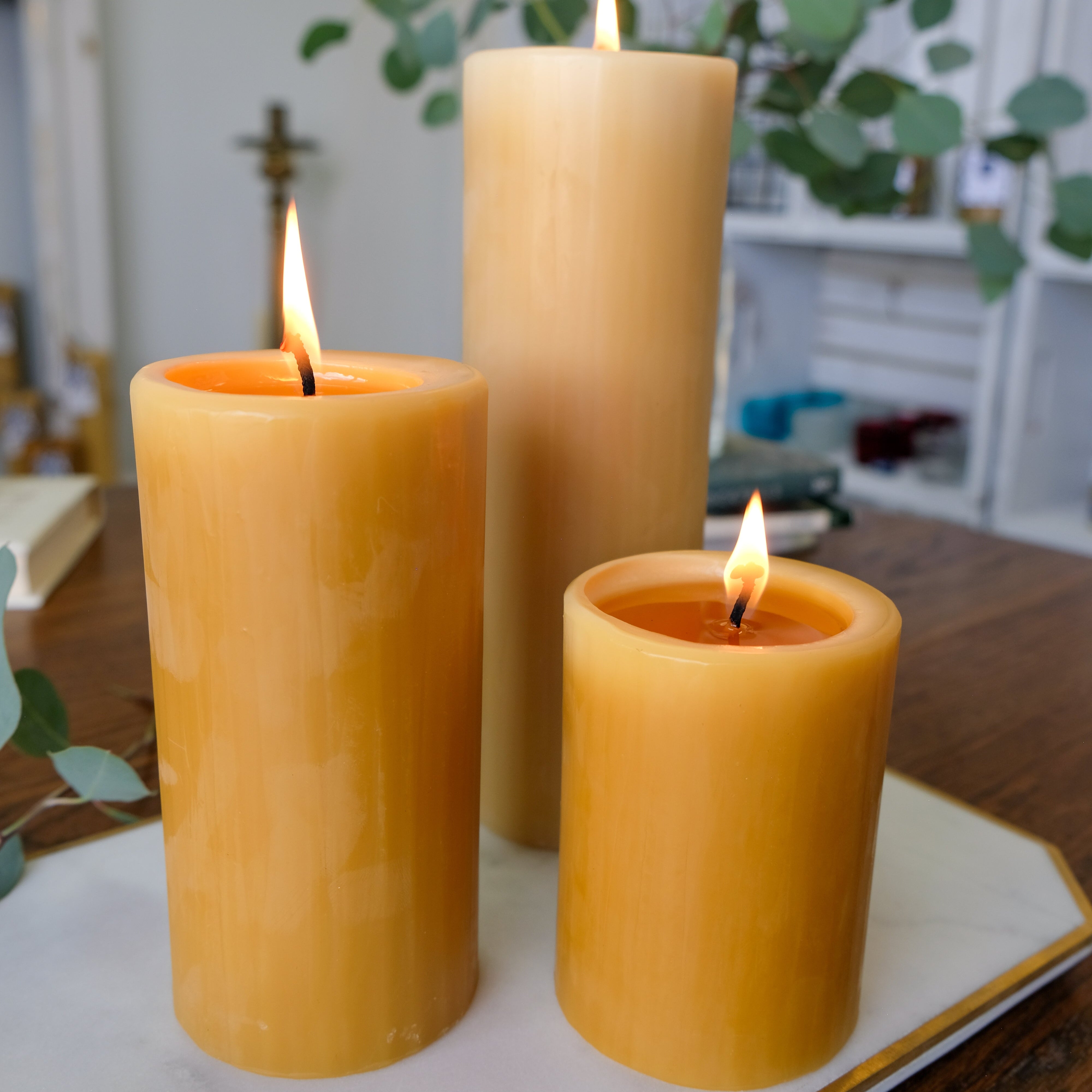
At Beeswax Co., we use only 100% pure, North American beeswax. Nothing is chemically bleached or processed. That’s why our candles burn clean, bright, and with the natural scent that reminds you of the hive itself.
So, how is beeswax made? The short answer: through the tireless teamwork of honeybees converting nectar into both honey and wax. The long answer is a story of sacrifice, teamwork, engineering, and natural beauty—crafted by some of Earth’s tiniest but most important workers.